
The eyes are the window to the brain.
Eye movement connects visual, neural, and cognitive functions. Discover the eye-tracking platform that gives healthcare professionals an early, objective read on biomarkers of neurovisual disorders*.
*Cleared for the diagnosis and staging of glaucoma, validated against the clinical gold standard. More applications in development.
The diagnostic gap
The eye captures. The brain sees.
Traditional vision diagnostics image the eye structures: the cornea, the retina, the optic nerve. Seeing happens further down the line, in the visual pathway and the brain circuits that turn a signal into sight. A structural scan can look normal while that downstream function is already failing. That is the gap where real vision loss hides, and where SONDA fits.
Structure
What imaging sees
OCT and fundus photography capture the anatomy of the optic nerve and retinal fibre layer with great precision. They say nothing about how the brain is actually using that signal.
Function
What SONDA measures
By tracking how the eyes respond to controlled stimuli, SONDA reads the visual system in action, brain included: a direct, objective measure of visual function loss.
How SONDA works
From gaze to insight.
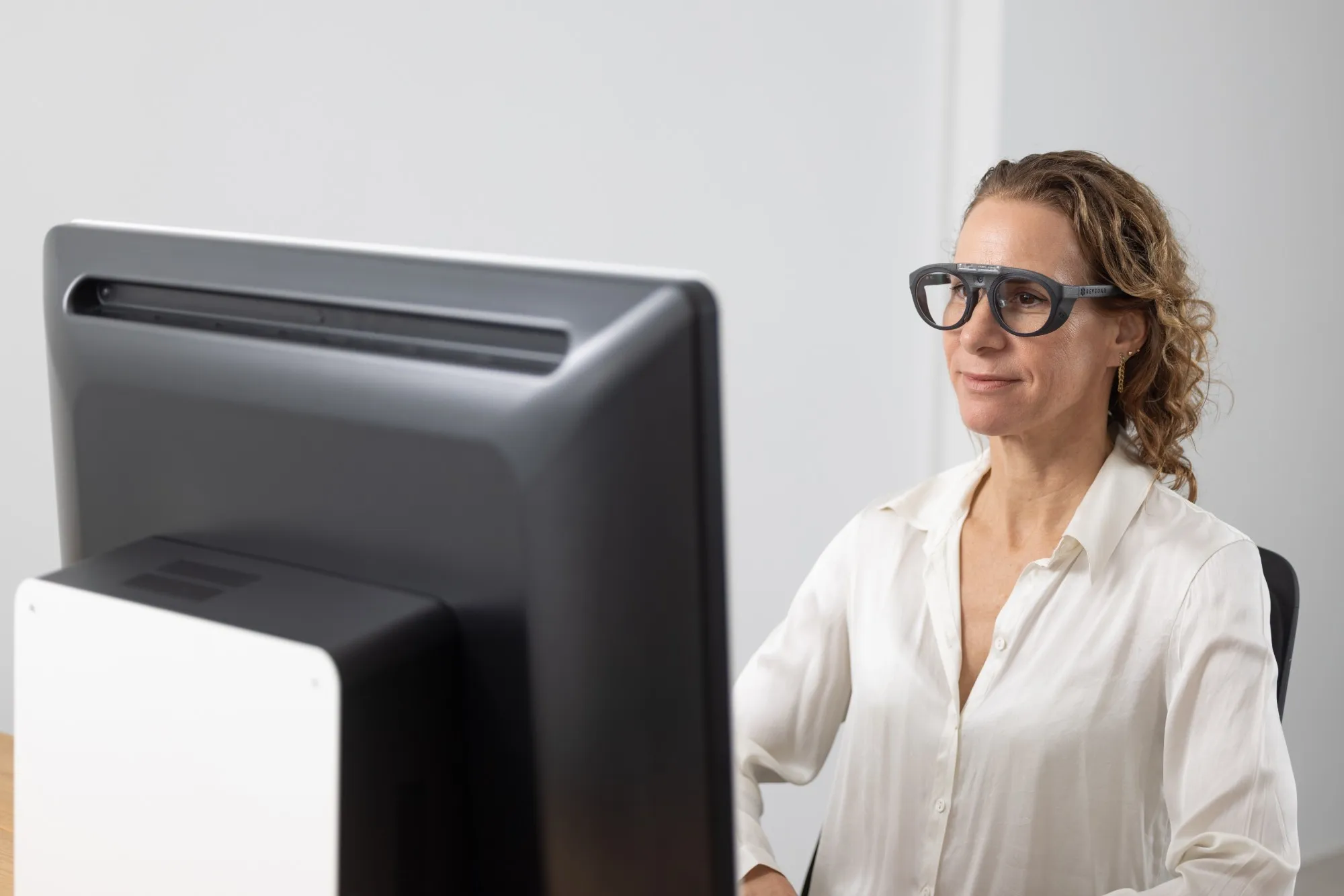
SONDA (Standardized Oculomotor Neuro-ophthalmic Disorders Assessment) translates the continuous, dynamic eye movement response to standardized stimuli into a clinical read on visual function.
- 01
Wear
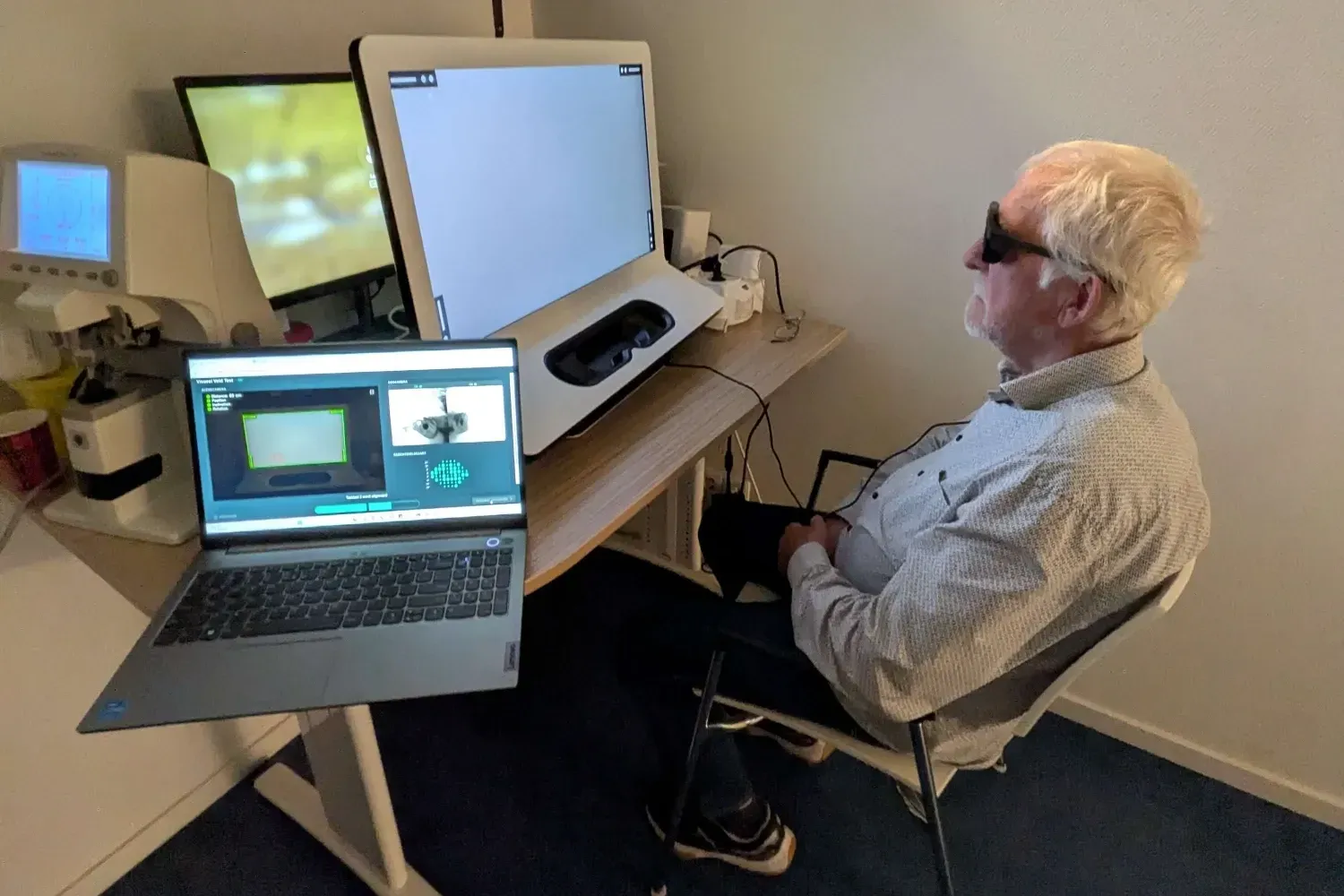
The patient puts on the SONDA glasses. No calibration, no dilation, no dark room required.
- 02
Follow
Eyes simply follow a continuous, unpredictable stimulus. No buttons, no verbal responses, nothing to get wrong.
- 03
Report
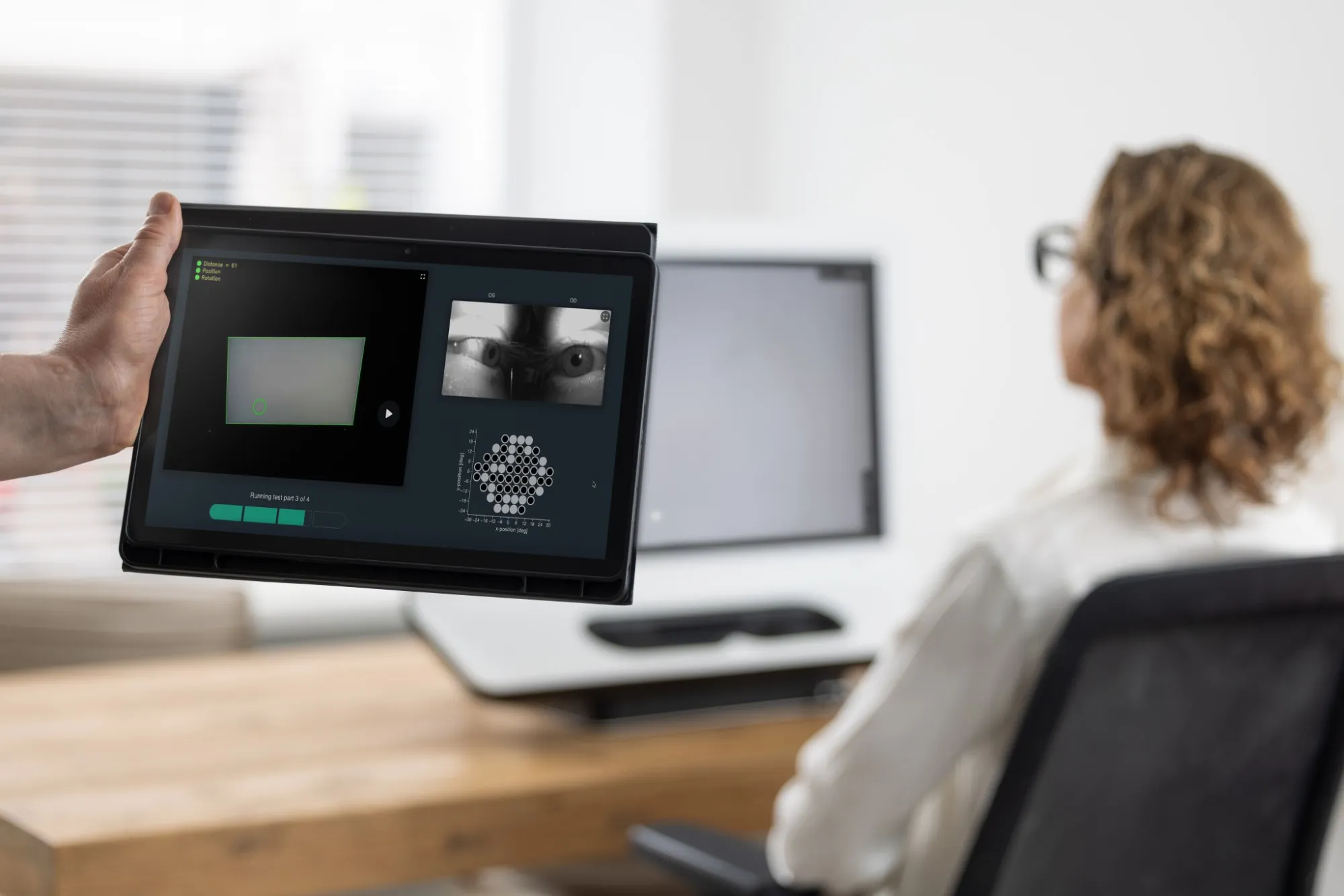
Patented algorithms turn the recorded gaze into a visual function report, ready in minutes.
Why it is different
Continuous psychophysics for functional oculomics
Instead of measuring one eye movement event at a time or a button press in response to individual stimuli, SONDA drives a continuous, unpredictable stimulus and reads how the eyes dynamically adjust to it, millisecond by millisecond. That continuous signal is where the diagnostic detail lives, and it is the basis of SONDA’s core patents. Instead of dozens of different eye movement tests and repetitive trials, you get a single, rapid assessment with high diagnostic power and multiple applications.
Patent US11966511B2
See the digital biomarkerIn the clinic today
Built for the pace of a real clinic.
80s – 120s
testing time
97%
diagnostic accuracy (AUC)
10+
peer-reviewed clinical studies
200+
average personnel hours saved
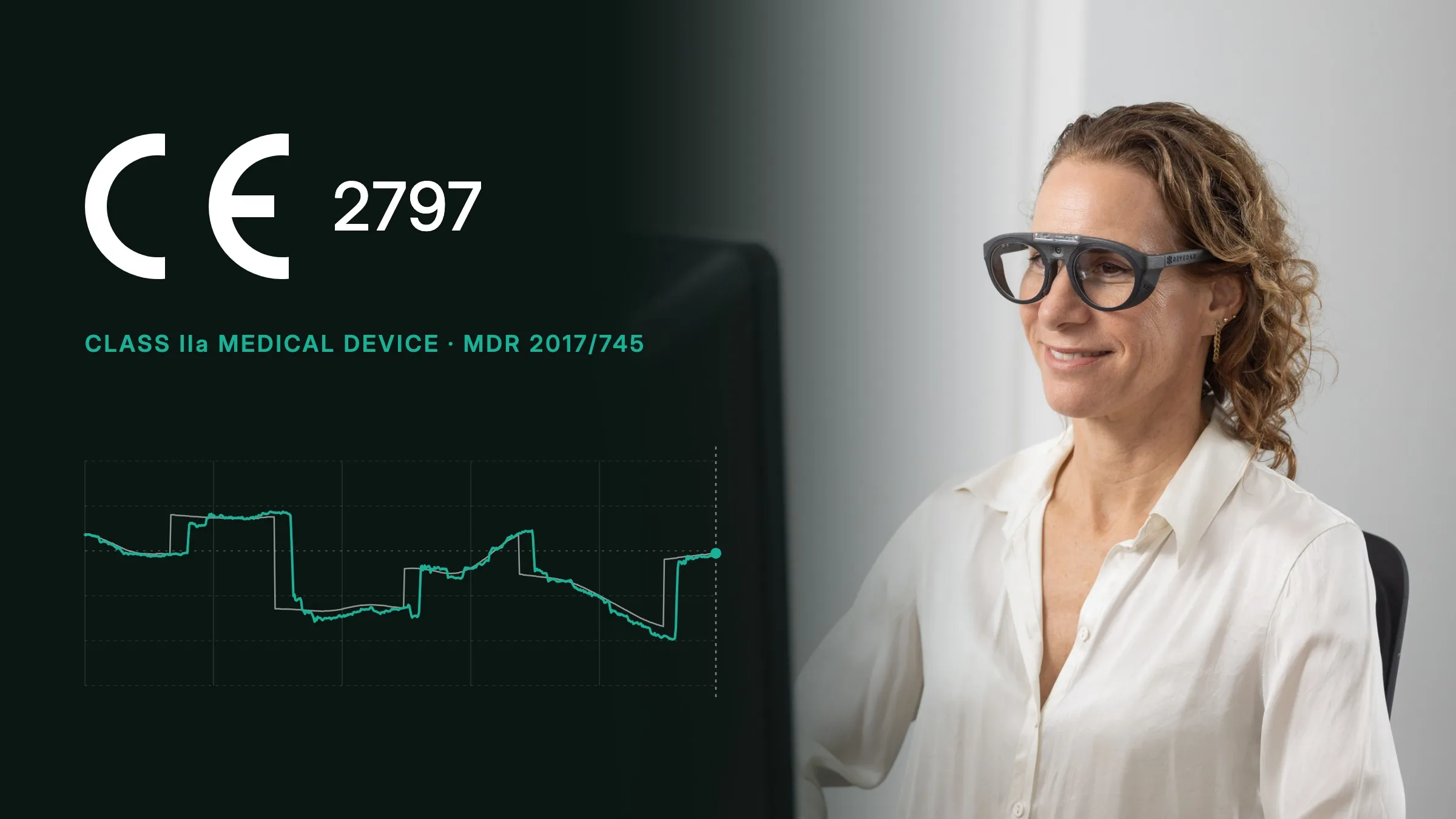
- CE Class IIa (MDR)
- ISO 13485:2016
- EN 60601-1
Who it’s for
Built for every point of vision care.

Optical retail & optometry
A fast, objective screening step at the first point of care, built to flag who needs referral and more applications to enhance your customer experience using eye-tracking.
Learn more →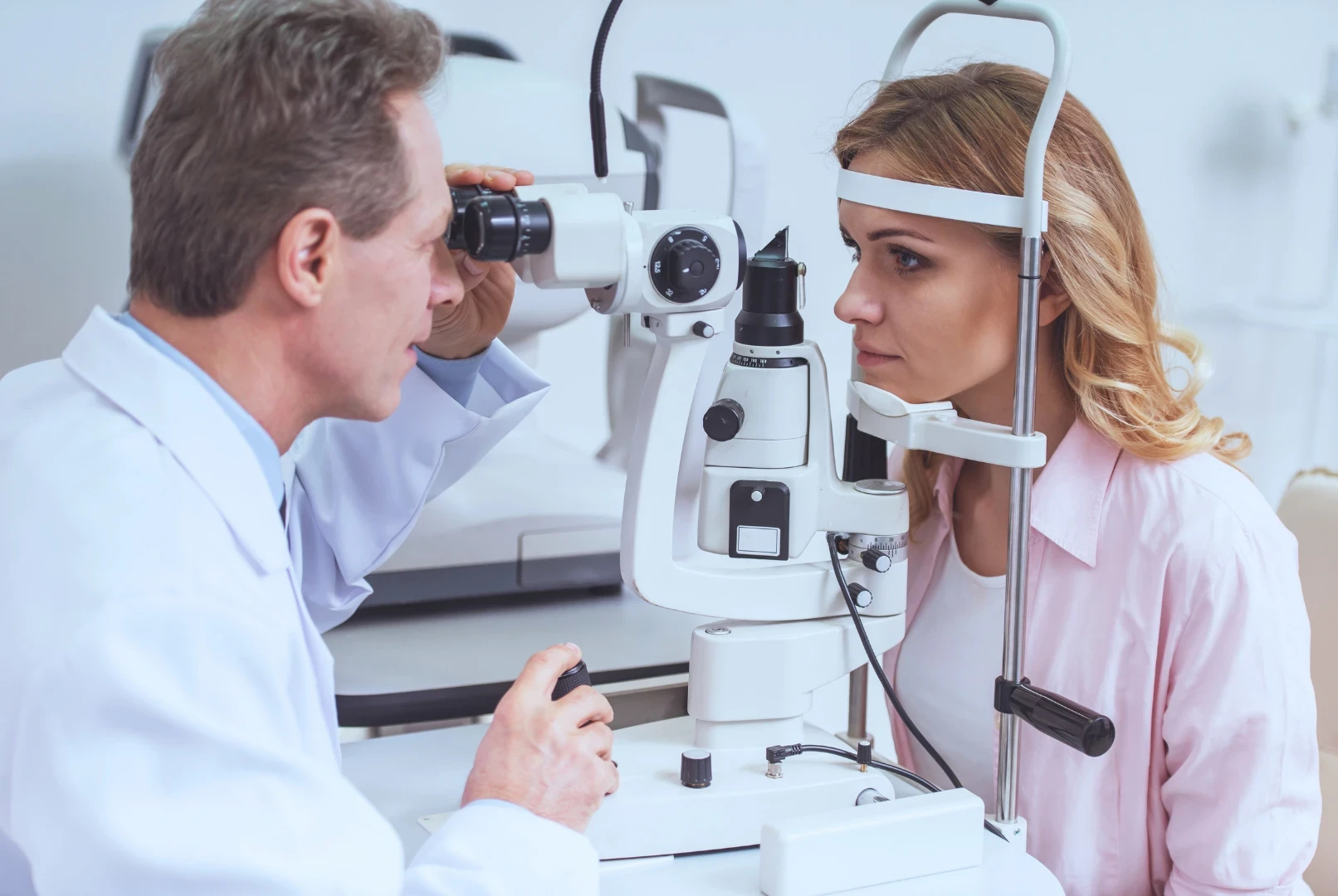
Hospitals & Clinics
A diagnostic and staging tool for glaucoma that fits inside a single appointment, validated against the clinical gold standard and a comprehensive platform for eye movement evaluation.
Learn more →
Research
Beyond glaucoma.
The same eye-tracking platform behind SONDA is the foundation of an active research pipeline, with peer-reviewed studies already underway in acquired brain injury, Parkinson’s disease and other neurological conditions. This is how the platform keeps expanding: one validated condition at a time.
Research partners





Origin
A spin-off from a leading academic medical center.
Reyedar started as a spin-off from the University Medical Center Groningen, building on years of academic research into eye movements, vision and the brain. That clinical and neuroscience grounding still shapes how we build SONDA today.


Two minutes closer to the answer
Wherever you see patients, there is a place for SONDA in the room.